
Call us now :08071781129
 Send Inquiry

 Send Inquiry
Mechanical Seal
Price 25 INR/ Piece
MOQ : 50 Pieces
Mechanical Seal Specification
- Hardness
- Up to 85 HRC (depending on seal face material)
- Theory
- Mechanical face sealing (axial/multi-spring design)
- Application
- Pumps, Compressors, Agitators, Mixers, Marine, Process equipment
- Usage
- Industrial
- Style
- Single, Double, Cartridge, Balanced, Unbalanced
- Material
- Steel
- Temperature
- -40C to 220C (depends on material selection)
- Product Type
- Mechanical Seal Rings
- Pressure
- Up to 25 bar (varies by model)
- Speed
- Up to 25 m/s
- Color
- Sliver
- Function
- Sealing rotating equipment shafts to prevent leakage
- Size
- Available from 10 mm to 150 mm (or as per custom requirement)
- Structure
- Stationary seat with rotating seal ring (varies: single, double, cartridge, etc.)
- Leakage Rate
- Minimal, depends on application and operating conditions
- Corrosion Resistance
- High (depends on material combination selected)
- Design Compliance
- API 682, DIN, ISO standards available
- Shaft Motion
- Rotary
- Secondary Seals
- Elastomers such as NBR, EPDM, FKM, PTFE
- Maintenance
- Easy to install and replace; cartridge models with easy fitting
- Spring Type
- Multi-spring, single spring or wave spring
- Operating Life
- Typically 10,000+ operating hours depending on conditions
- Typical Industries
- Chemical, Petrochemical, Refinery, Water treatment, Food and Beverage, Pulp and Paper
- Sealing Faces
- Carbon vs Silicon Carbide / Ceramic / Tungsten Carbide
Mechanical Seal Trade Information
- Minimum Order Quantity
- 50 Pieces
- Supply Ability
- 1 Piece Per Week
- Delivery Time
- Week
- Main Domestic Market
- Delhi, Haryana, Rajasthan
About Mechanical Seal
We have a wide collection of mechanical seal rings. It is a device that helps to connect systems or mechanisms by preventing leakage (for example, in a pumping system), containing pressure, or excluding contamination. The effectiveness of a seal is determined by adhesion in the case of sealants and compression in the case of gaskets. The seals are used in pumps in a variety of industries, including chemicals, water supply, paper production, food processing, and many others. You can blindly trust our products and invest your money.
| Material | Epdm Rubber |
| Usage/Application | Industrial |
| Pressure | 14 bar |
| Color | Brown |
| Seal Faces | Silicon carbide, carbon, tungsten carbide |
| Shaft Diameter | 65 mm |
| Size | 1-5 inch |
Durable Sealing Faces
Our seals offer a choice of carbon, silicon carbide, ceramic, or tungsten carbide for sealing faces. These materials provide remarkable wear resistance, chemical compatibility, and low leakage rates, essential for industrial reliability and long-term usage.
High-Performance Elastomers
The secondary seals utilize advanced elastomers such as NBR, EPDM, FKM, and PTFE. These materials ensure resistance against chemicals, temperature fluctuations, and process fluids, enhancing the seal's integrity even in harsh environments.
Compliant and Versatile Design
Complying with API 682, DIN, and ISO standards, our mechanical seals are suitable for global markets and various industries, including chemical, petrochemical, refining, water treatment, food and beverage, and more.
Easy Installation & Maintenance
Designed for user convenience, our cartridge models and standardized structures enable swift installation and easy replacement, reducing system downtime and maintenance workload. Comprehensive design options cater to new and retrofit applications.
FAQ's of Mechanical Seal:
Q: How do I choose the right sealing face material for my application?
A: Selection depends on media compatibility, pressure, temperature, and abrasion levels. Carbon offers good all-round performance, while silicon carbide, ceramic, and tungsten carbide excel in challenging or abrasive environments. Our team can help assess your specific needs.Q: What is the typical operating life of these mechanical seals?
A: Under proper operating conditions, our seals usually last over 10,000 hours. Service life depends on application parameters, material compatibility, maintenance practices, and system cleanliness.Q: Where can these mechanical seals be used?
A: They're widely installed in pumps, compressors, agitators, mixers, and marine or process equipment across chemical, petrochemical, refinery, water treatment, food and beverage, as well as pulp and paper industries.Q: What is the installation process for cartridge-type seals?
A: Cartridge seals are designed for quick installation. Align the seal on the shaft, tighten according to instructions, and secure all locking devices. This minimizes downtime and eliminates complex assembly steps.Q: What are the key benefits of using multi-spring or wave spring designs?
A: These spring types provide uniform face loading and improve seal stability during operation. Multi-spring designs resist clogging and accommodate shaft misalignment, while wave springs allow for more compact seal designs.Q: What level of leakage can I expect?
A: Our seals are engineered for minimal leakage, typically within industry-standard limits. Actual leakage depends on the seal type, operating conditions, and selected material combinations.Q: Are these mechanical seals easy to maintain or replace?
A: Yes, especially with cartridge models, maintenance and replacement are straightforward, which helps minimize downtime. Standardized designs further simplify the process for both new and retrofit installations.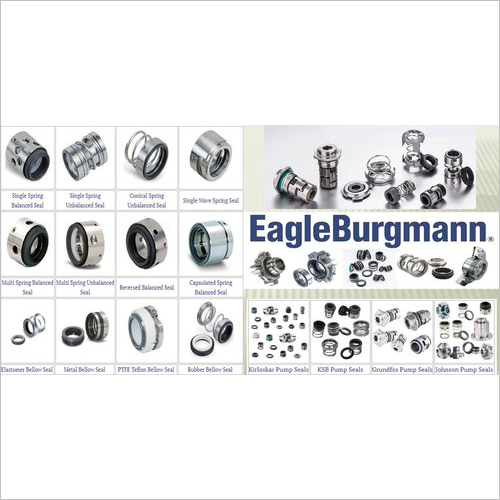
Tell us about your requirement

Price:
Quantity
Select Unit
- 50
- 100
- 200
- 250
- 500
- 1000+
Additional detail
Mobile number
Email

More Products in Mechanical Seal Category

Elastomer Bellow Mechanical Seals
Price 1500 INR / Piece
Minimum Order Quantity : 1 Piece
Product Type : Elastomer Bellow Mechanical Seals
Size : 15 mm to 100 mm shaft size
Color : Sliver
Material : PVC

Metal Bellow Mechanical Seals
Price 4500 INR / Piece
Minimum Order Quantity : 1 Piece
Product Type : Metal Bellow Mechanical Seals
Size : Customizable, typically 20 mm to 150 mm shaft diameter
Color : Sliver
Material : Metal

PTFE Bellow Mechanical Seals
Minimum Order Quantity : 1 Piece
Product Type : PTFE Bellow Mechanical Seals
Size : Available from 18mm to 100mm shaft size
Color : Sliver
Material : PTFE

Eagle Burgmann Seal
Price 500 INR / Piece
Minimum Order Quantity : 5 Pieces
Product Type : Burgmann Seal
Size : All Size Available
Material : Metal


 Send Inquiry
Our Products


C-83, First Floor, Mayapuri Industrial Area, Phase-Ii, New Delhi - 110064, India

Ms Neema
(Partner)
Mobile :08071781129
 Send Inquiry
 Send SMS

Developed and Managed by Infocom Network Private Limited.


